01 · Alva Labs · AI interview scheduling

Designing an agentic experience to take the admin out of interview scheduling.

User outcome
Recruiters spent less time chasing availability, sending follow-up emails and gathering information across tools.Exact figures are confidential.
Business outcome
Many stalled deals became signed contracts. Interview scheduling removed a major obstacle for customers who were ready to move forward with Alva.

I took ownership of interview scheduling in Alva’s T-Rex squad, from research and problem definition to product direction and design. I had no PM support on this project, so I also owned the MVP scope and success measures. This included the scheduling workspace we released and an agentic experience for scheduling through an in-app chat.

02 · Why it mattered

Recruiters kept people and tools in sync by hand.

The business believed that helping with hiring admin could give more customers a reason to choose Alva. I took ownership of understanding that work: what recruiters were keeping in sync, where it cost them time, and what would make moving it into Alva worthwhile.

Signals

  • Interview coordination spread across tools, chat threads and notes
  • Recruiters spending time keeping that information in sync
  • A business hypothesis: removing that overhead could help convert customers to Alva

Research

I traced recent scheduling experiences

5 internal and 7 customer interviews, following the steps, tools and workarounds people used.

I mapped the patterns across those interviews

I also reviewed 90 days of interview usage to understand where scheduling could fit in Alva.

The problem

Recruiters were keeping people, calendars and interview details in sync by hand. Chasing replies and repeating updates across tools took time away from candidates.

I mapped the work around every interview.

I grouped what I heard by the work around an interview, from planning a round to arriving prepared. This map brings those patterns together.

The scheduling experienceFive moments · Five lenses

Scroll across to follow the five moments

Interview insights organized by five moments and five research lenses.
Interview
journey
01Plan the wave02Get times agreed03Lock the slot in04Adapt when it breaks05Walk in
ActionsWhat they do

Reserve managers’ time at kickoff. Batch interviews into rounds.

Check calendars, propose times or send a booking link.

Send invitations. Copy the details into the other tools.

Find new times, reissue invites and follow up on replies.

Check the invitation and look up the candidate and role.

GoalsWhat they want

Have time ready when candidates reach the interview stage.

Agree a time that works without days of messages.

Keep the agreed slot held and every record in sync.

Keep the round moving when someone’s plans change.

Arrive with enough time and context to prepare.

Feelings & thoughtsHow it feels

Uncertain whether candidates will be ready for the time reserved.

Anxious that the slot will disappear while waiting for a reply.

Cautious about trusting the booking without checking again.

Drained by repeating the coordination after a cancellation.

Caught off guard when the interview arrives without context.

Pain pointsWhat gets in the way

Timing is a guess. Calendar blocks need constant upkeep.

Availability still needs checking. Reserved time can appear busy.

Pending invites can leave slots open. Records fall out of sync.

Replies stall. A change means updating everyone all over again.

Back-to-back meetings leave little prep time. Invites lack role details.

OpportunitiesThe unmet needs

I need to plan interview time with less guesswork.

I need to agree times without chasing both sides.

I need to know the booking is secure and up to date.

I need to recover a booking without restarting the coordination.

I need time and context before the interview.

Condensed research synthesis · Notes are paraphrased from the original experience map.

From interview patterns to opportunities

I mapped the needs behind interview admin. The business hypothesis was that solving them would give prospects a reason to choose Alva.

Problem space

Opportunity Solution Tree
Business goal

Increase conversion among prospects evaluating Alva for their interview workflow.

Product goal

Hiring teams spend less time on interview admin.

Showing five opportunities. Opportunities one, two and three are the case-study focus.
03 · Design decisions

Planning interviews and keeping bookings on track.

The scheduling workspace and the agent.

Scheduling workspace

The released interface brought interview scheduling into Alva. Recruiters could coordinate interviews there, reducing the administrative work spread across emails and other systems.

Agentic experience

I also designed a way to schedule through an in-app chat with an AI agent. This case study follows three problems: planning interview time, agreeing on a time, and knowing whether the booking is secure and up to date.

  1. Agentic experience

    Problem 1I struggle to plan interview time before calendars fill up.

    Recruiters were reserving time weeks ahead, while still guessing when candidates would be ready. I treated that early planning as part of scheduling and explored how Alva could help prepare a whole interview round.

    What I heard

    A recruiter wanted first interviews in one week and the next round in the following week. Keeping that pace meant predicting demand and blocking managers’ time by hand.

    One week

    First interviews

    The following week

    Next round

    Predict demand · Block managers’ calendars by hand

    My decision

    Bring planning ahead into the experience.

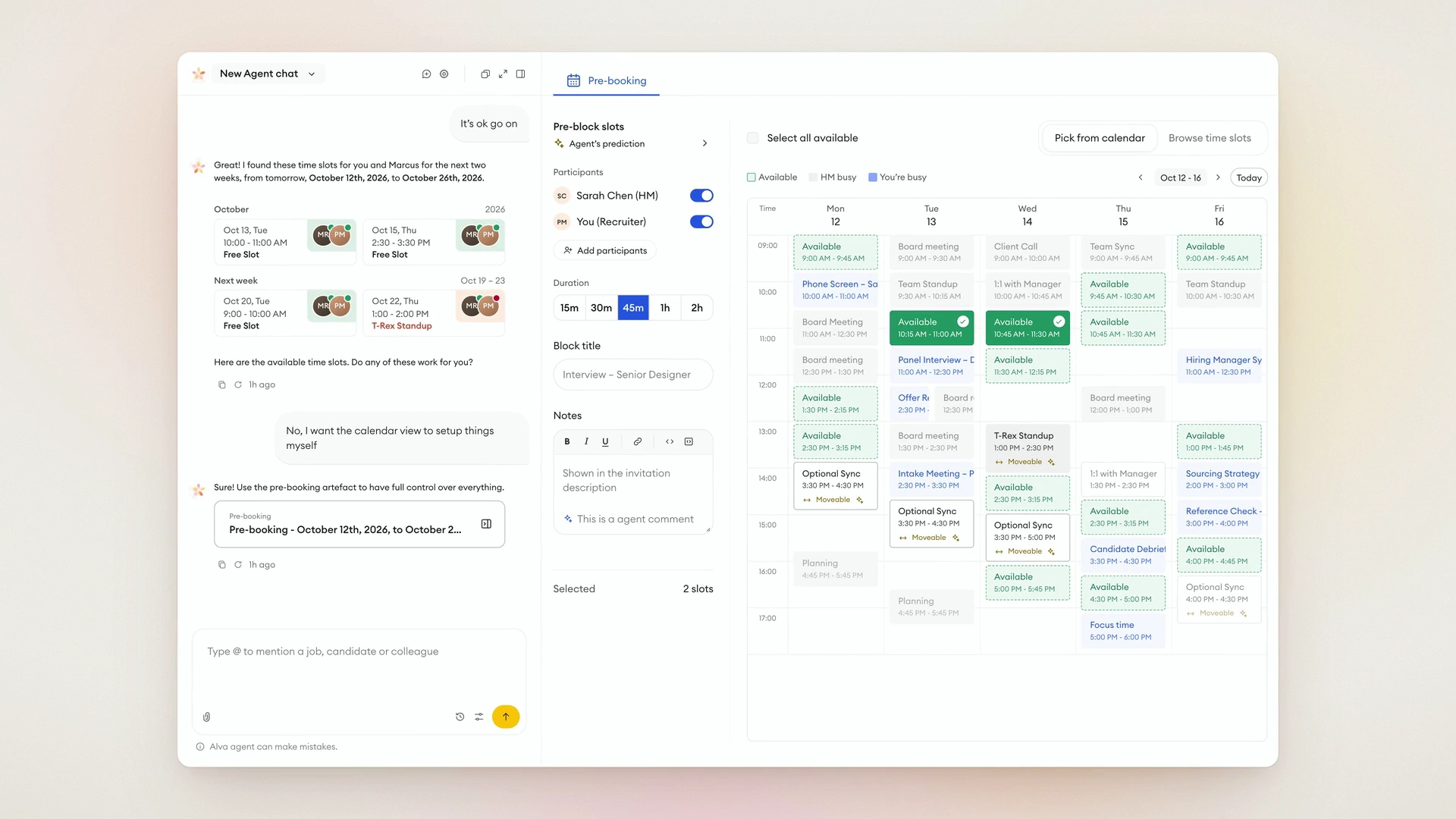
    I proposed a forecast of the interview round, a way to reserve time, and conditions such as the week the recruiter wanted to keep interviews within.

    Forecast

    The expected interview round

    Conditions

    The week interviews need to happen

    Reserve time

    Protect time before invitations

    Why this direction

    Pre-booking already helped teams protect interview time. The opportunity was to support that routine and reduce the estimating and calendar work around it.

    Research and design reasoning · Diagrams are illustrative
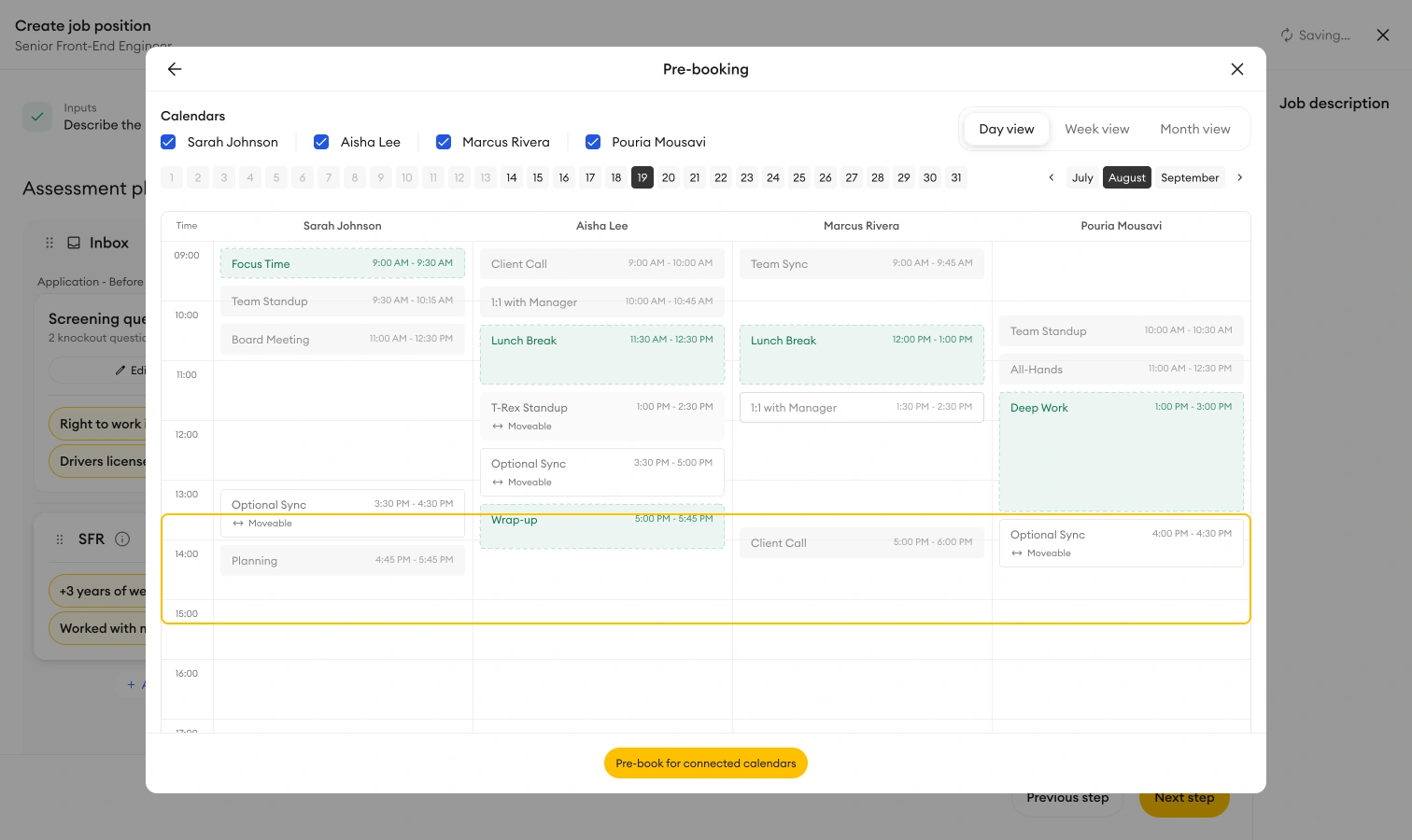
    Pre-booking exploration showing four hiring-team calendars in a pop-up within job creation Rejected

    Pre-booking was tied to job setup, while recruiters needed to revisit the plan as candidates progressed.

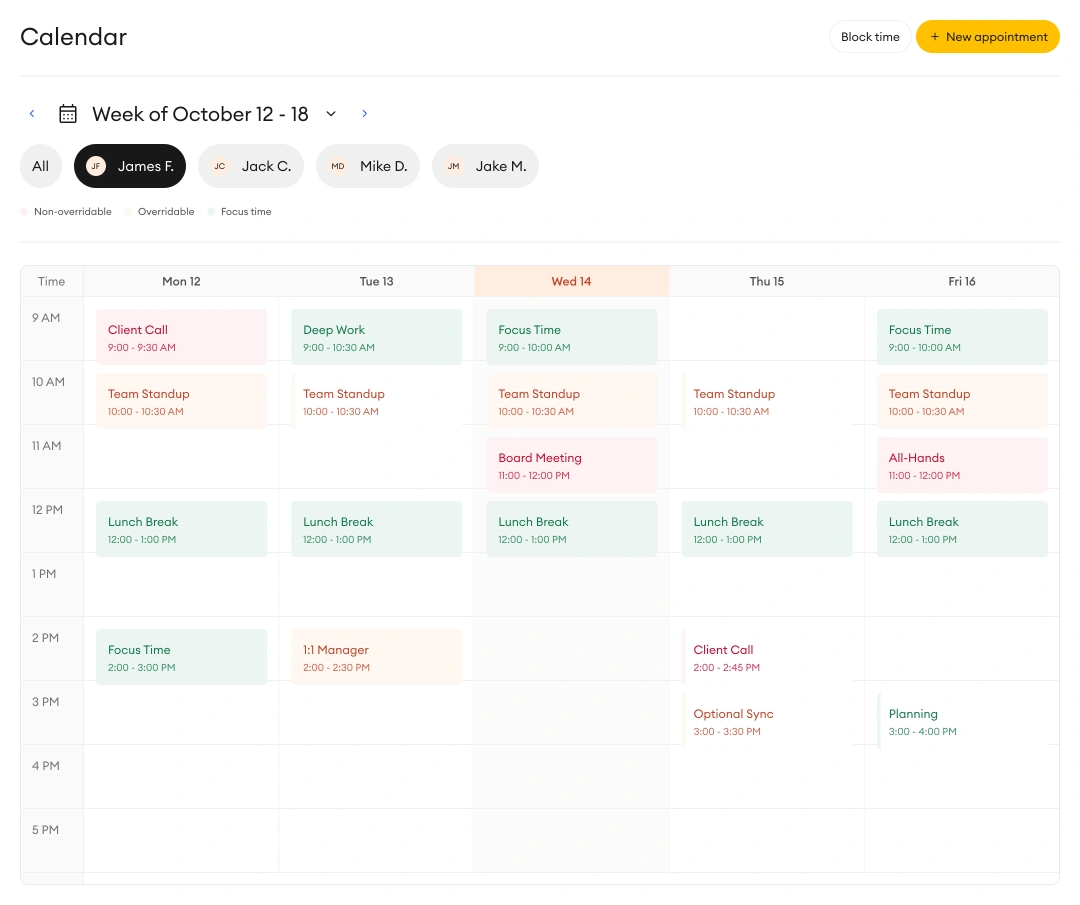
    Weekly calendar exploration with hiring-manager filters and different colors for fixed meetings, movable meetings and focus time Rejected

    The calendar still left recruiters to estimate demand and reserve interview time by hand.

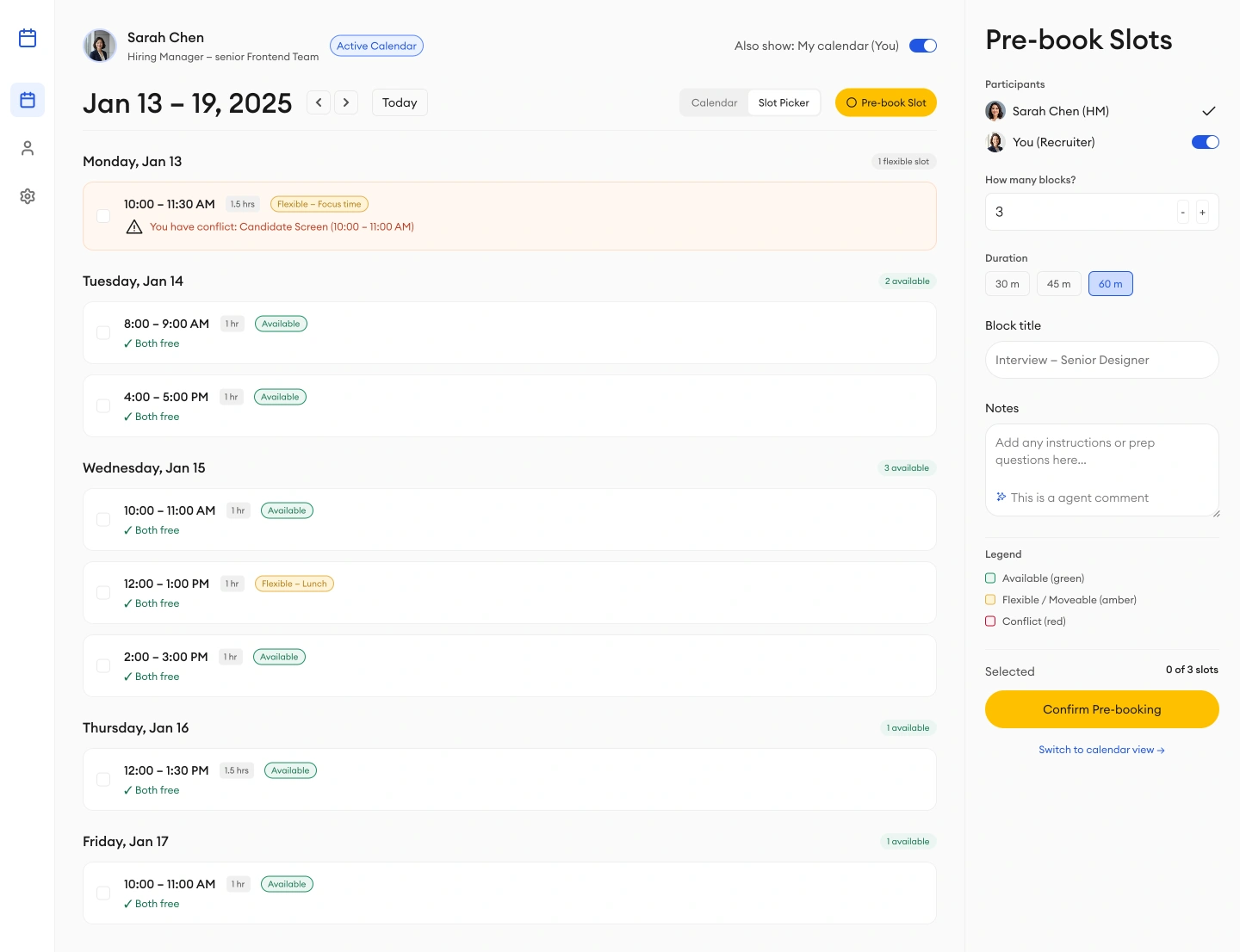
    Pre-booking exploration with a daily list of available and conflicting slots beside a form for reserving interview time Rejected

    The list separated slots from the rest of the calendar, making it harder to judge where a whole interview round would fit.

    A forecast leads into shared calendar time. The recruiter adjusts the slots, adds a first-week condition and confirms the reservations.
  2. Agentic experience

    Problem 2Finding a time means repeated back-and-forth.

    Agreeing on a time meant checking calendars, confirming with managers and exchanging messages with candidates. Even time reserved for interviews could appear unavailable. I explored how the agent could use calendar context to suggest times recruiters could actually offer.

    What needed to change

    Free or busy did not explain what a slot was for. Recruiters also checked with managers because the calendar alone did not tell them which time they could use.

    The recruiter’s calendar

    Reserved for interviews

    What the scheduler sees

    Busy · Unavailable

    Remove the blocksSend the link quickly

    The time could be taken while candidates booked.

    My decision

    Use the context behind the calendar block.

    I explored using event titles and descriptions when presenting times, recognizing manually reserved interview slots and giving those reservations priority.

    Read the calendar event
    Title
    Interview reservation
    Description
    What the time is held for
    Recognize the purpose

    Prioritize interview reservations

    Why AI was relevant here

    The agent would need to interpret the purpose of the time already held. That gave the AI exploration a concrete problem to address: make the recruiter’s existing preparation useful when suggesting times.

    Research and design reasoning · Diagrams are illustrative
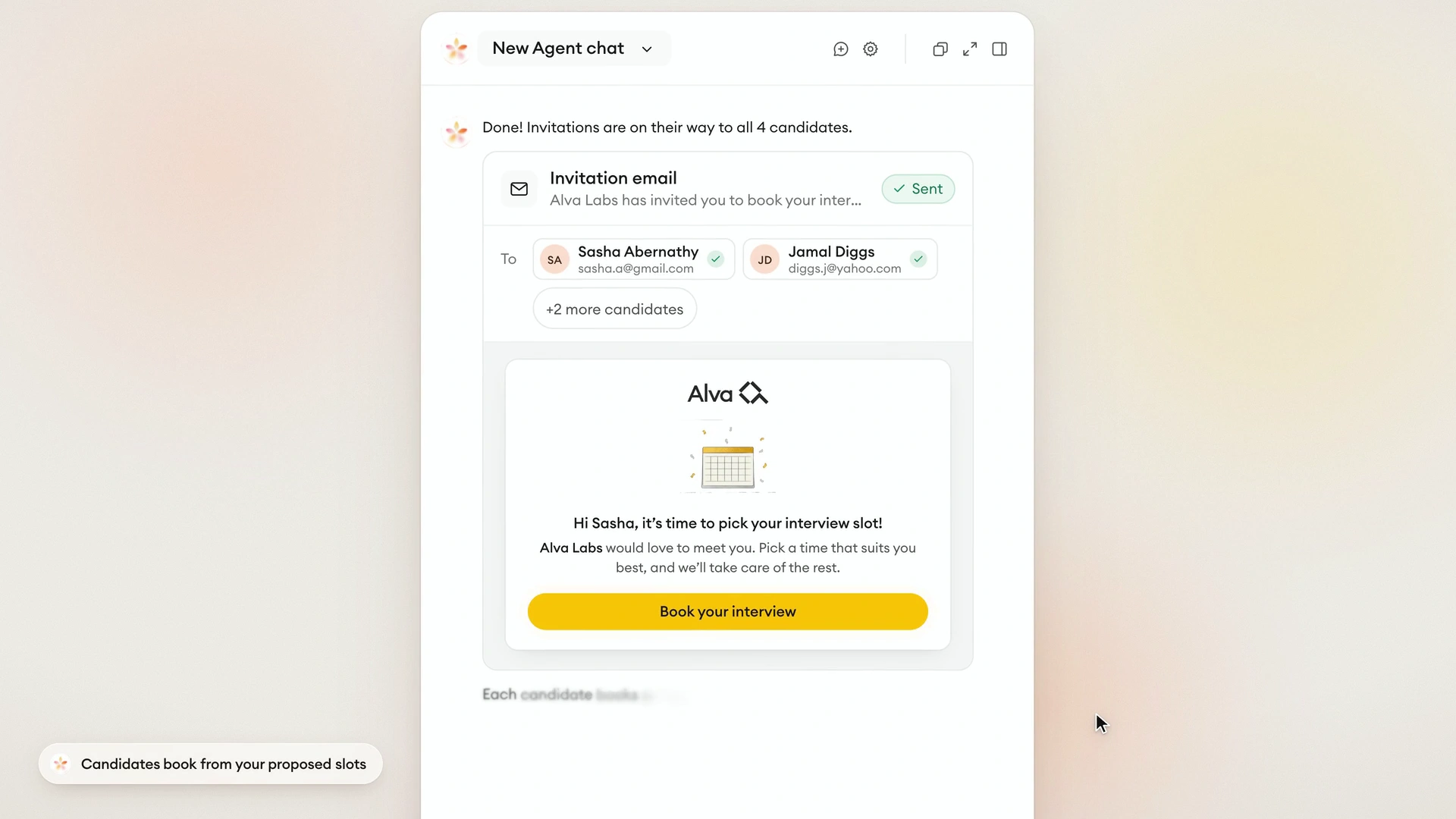
    The recruiter chooses interviewers, reviews the setup and sends invitations. Suggested times include existing interview reservations.
  3. Agentic experience

    Problem 3I can’t tell whether the booking is secure and up to date.

    Sending an invitation did not mean the interview was confirmed. Pending replies and details spread across tools left recruiters checking whether a booking would hold. I included that status in the chat and overview so recruiters could see what still needed attention.

    What I heard

    The same interview could live in several places. Pending invitations and missing confirmations left recruiters checking and following up to find out what was actually booked.

    CalendarInvitationCandidate record
    Is the interview actually booked?

    Check replies · Follow up · Update the records

    My decision

    Make the booking status clear.

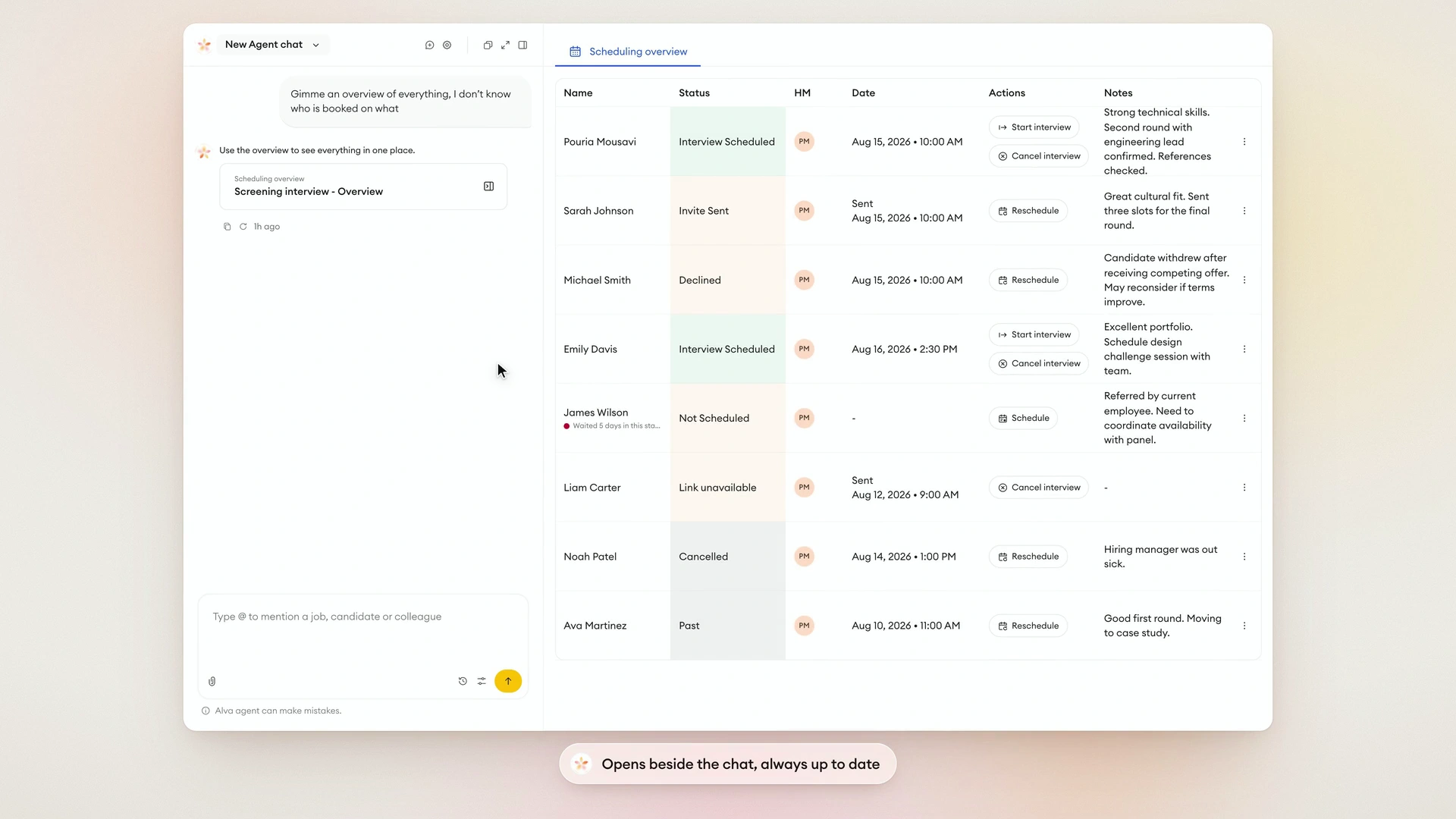
    I proposed an overview widget and a detailed view showing where candidates and hiring managers stood in scheduling.

    Candidate + hiring managerOne overview
    Invitation sentWaiting for replies
    Interview confirmedBooking agreed

    Open the details to see who still needs to respond.

    Why this direction

    Recruiters needed to distinguish an invitation sent from an interview confirmed. Keeping candidate and hiring-manager status together would make unanswered invitations and missing confirmations easier to spot.

    Research and design reasoning · Diagrams are illustrative
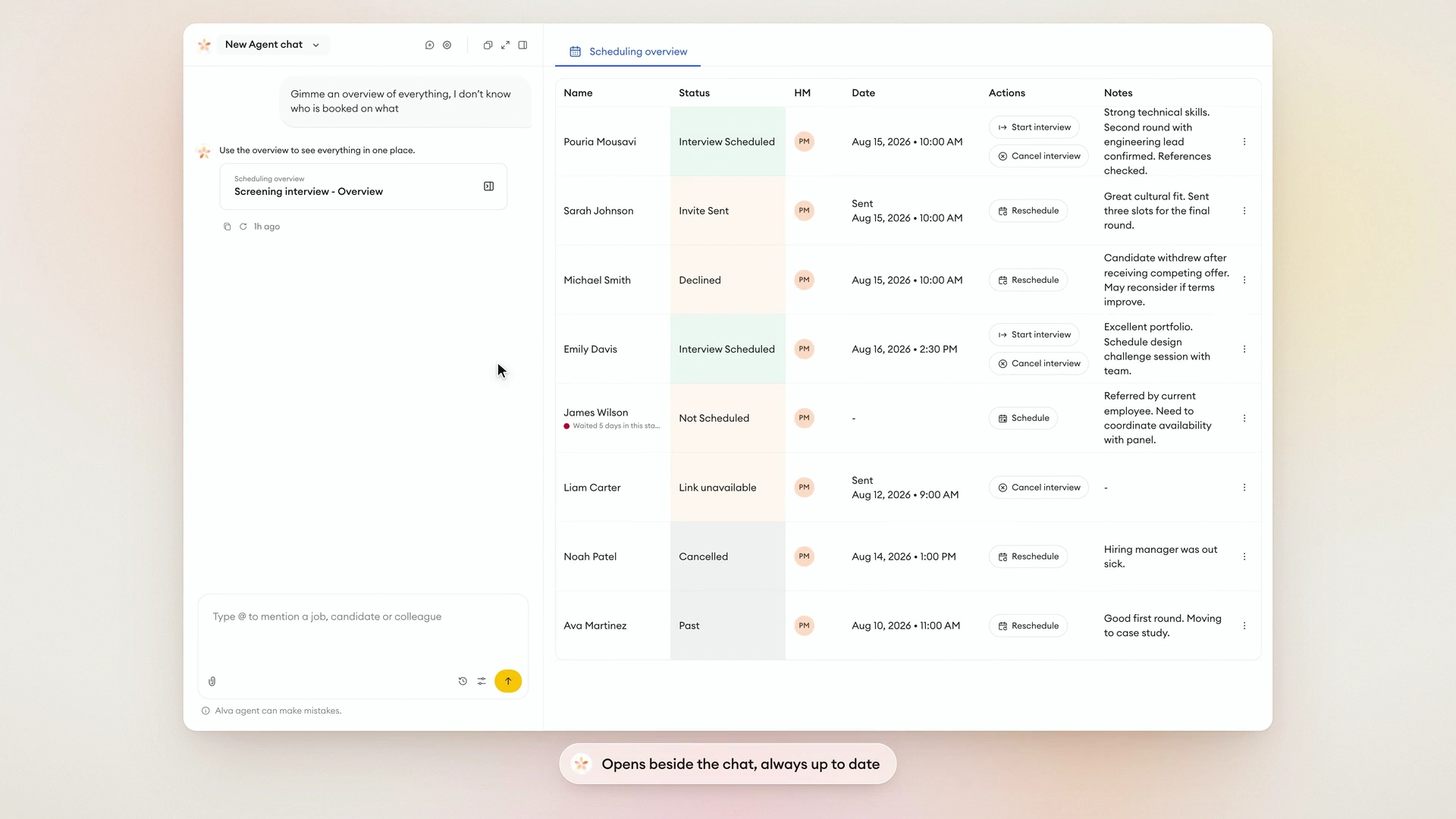
    The overview opens beside the chat. Recruiters can check interview status across the round or ask about a particular candidate.

Scheduling workspace

Success metrics

I wanted to know whether teams connected their calendars, got interviews booked and came back to schedule again.

This was the measurement plan. The release outcomes follow in the next section.

Connect calendars

Calendar connection rate

People with a connected calendar

divided by

All users in the organization

Measured per organization. I also wanted a separate count of connected people who weren’t recruiters.

Planning and setup measures
Interview reservations
Jobs with reserved interview time, per organization.
Calendar reminders
Organizations using reminders to connect hiring managers’ calendars.

Get interviews booked

Interview scheduling ratio

Candidates booked

divided by

Candidates entering a stage with an interview assessment

Calculate the ratio for each stage, then take the median by job and the median by organization.

Booking completion measures
Working hours → Scheduling
Conversion rate between these steps.
Proposed slots → Email preview
Conversion rate between these steps.
Send email
Click rate at the final step.

Overall healthBooked candidates per organization

Keep using scheduling

One-time use

I wanted to see where people tried scheduling once and stopped.

Opened scheduling once
Users who opened scheduling only once ÷ all users.
Booked only one interview
Users who booked exactly one interview ÷ users who opened scheduling.
Workspace use measures
Scheduling views
Share of completed flows using Calendar, Time slot or Date range.
Interview overview
Users who opened the overview for more than 10 seconds.

I planned to compare smaller customers and enterprise separately, so the results would show where scheduling was useful to each group.

04 · What changed

Outcomes

Scheduling workspace

The release reduced the admin around interviews and helped close contracts that had been waiting on scheduling.

User outcome

Less admin work to get interviews booked.

Recruiters spent less time going back and forth between candidates, hiring managers and separate systems. That supported our department’s “time to talent” goal by leaving more time for candidates.

Exact figures are confidential.

Business outcome

Many stalled deals became signed contracts.

Interview scheduling had been a major obstacle for customers considering Alva. Adding it helped our sales team close contracts that had been waiting.

My ownership

Research, product direction
and design.

I owned the process without PM support. That meant defining the problem, running the research, setting the MVP scope and deciding how we would measure success. Customer Success helped recruit customers; I interviewed recruiters and hiring managers and mapped their workflows and workarounds.

Within T-Rex, I designed the scheduling workspace we released and explored scheduling through an AI agent. The research guided how the agent could help plan interview rounds, use reserved time and keep track of bookings.

05 · Next exploration

What comes next

Scheduling workspaceAgentic experience
What the research left open

Changes could send recruiters back through the same coordination work.

Reducing follow-ups when an interview changes

Next exploration

A recruiter described two changes to one interview turning into weeks of delay. Each change meant finding time with the candidate and managers again. I’d explore how to make that easier.

  1. 01

    The agreed time changes

    A cancellation breaks the arrangement the recruiter worked to make.

  2. 02

    Availability needs checking again

    The candidate and interviewers need another time that works for everyone.

  3. 03

    Coordination starts again

    More replies and calendar checks can push the interview round back.

What I’d test next

The open questions behind the next iteration:

  1. Scheduling workspaceAgentic experience

    Can recruiters recover from a cancellation with fewer manual follow-ups? I’d follow the work from cancellation to a new confirmed time.

  2. Agentic experience

    Can the agent recognize interview reservations without treating every busy event as bookable? I’d test the calendar situations that caused workarounds in the research.

  3. Scheduling workspace

    Which teams keep using scheduling? I’d compare completed bookings and repeat use for smaller teams and enterprise customers.

End of case studyAlva Interview Scheduling